
Story
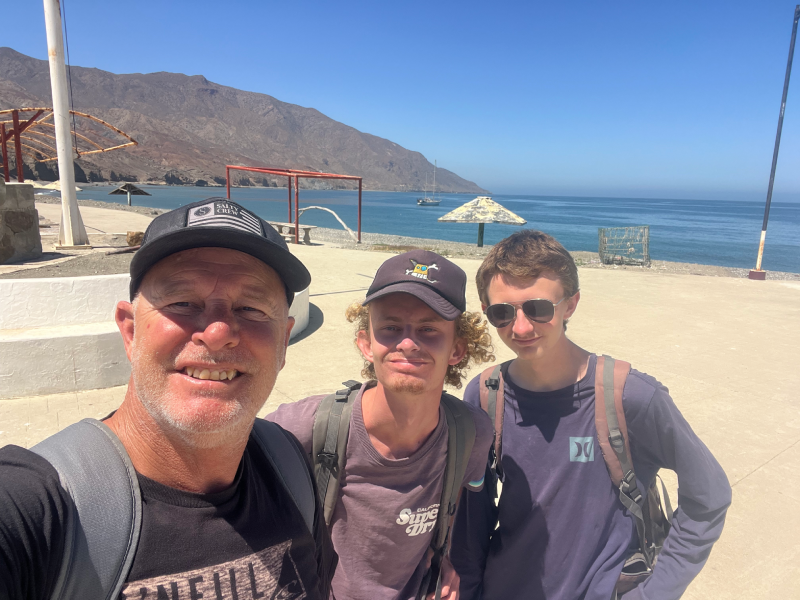
Captain’s Story
My journey to becoming a sailor started when I was 10 years old, back in 1975. One of my mom’s friends owned a sailboat, and I was invited to go sailing. We left from King Harbor in Redondo Beach, California. I remember being excited and a little nervous heading out onto the ocean, but completely fascinated.
The thing I remember most was the knot meter—a circular instrument near the companionway. As the boat picked up speed and the heel increased with the building wind, the numbers climbed. Five knots… then faster. For a 10-year-old, it felt absolutely incredible—like flying across the ocean under sail.
Many years later, in my late 20s, around 1991, that memory came rushing back. I spotted a 25-foot sailboat on a trailer with a “for sale” sign, parked in front of a house in Manhattan Beach. It immediately brought me back to that first day on the water.
I pulled over, walked around the boat, and was instantly drawn to it. Looking back, I think I was really drawn to that memory. I knocked on the door, met the owner, and bought the boat on the spot—cash, no negotiation. At that point, my sailing knowledge amounted to one childhood memory, but I wanted to feel that same sense of excitement again.
The boat was completely derigged, with the mast lying across the top. I had no sailing or rigging experience and no instruction. But I had a truck and knew how to tow, so I brought it to Marina del Rey—taking city streets, getting a flat tire along the way, fixing it myself, and continuing on.
Once there, I figured it out piece by piece. I stepped the mast, set the standing rigging, ran the lines, attached the sails, launched the boat, and tied up at the dock—completely on my own.
When I finally got out on the water, I was honestly terrified. I didn’t know the rules, didn’t understand how anything worked, and had no real plan. I was just figuring it out as I went.
I motored through the harbor with the mainsail up, fumbling through tacks up the channel. At one point, I hoisted the headsail. The boat heeled hard, accelerated, and suddenly I was headed straight for the rocks. At the last second, I tacked—without really knowing how—and managed to avoid them.
It was probably the worst possible way to learn how to sail—and it’s exactly how I did it.
I kept coming back. Towing the boat, rigging it, launching it, and trying again. Eventually, I realized I needed proper instruction. My first experience with a sailing school was disappointing, but I eventually found one that gave me a solid, practical foundation.
I started sailing before GPS was widely available, so I learned navigation the traditional way—dead reckoning, paper charts, bearings, and visual references. I didn’t use GPS until 1999, when I crossed the Pacific from California to Hawaii using a basic handheld unit to confirm my position.
From there, things started to click. I was invited to race on Wednesday nights, and that’s where my learning accelerated. Racing sharpened everything—sail trim, boat handling, rules of the road, crew coordination, and decision-making. I raced consistently for about three years throughout Southern California.
At the same time, I began taking on overnight trips, weekend cruising, and deliveries. I upgraded boats along the way, each one more capable and complex than the last, expanding both my skills and my understanding of onboard systems.
After several years and many miles, an opportunity came along that changed everything. A dock neighbor asked if I could take his powerboat from Marina del Rey to Puerto Vallarta—about 1,300 miles. That was my first paid captain’s job.
Somewhere off the coast of Baja, it hit me—I could actually make a living doing this.
By then, I had enough sea time to qualify for my captain’s license. I earned it and began working professionally on the water.
I started a sailing charter business in Catalina, running snorkeling trips and sunset cruises on a 40-foot catamaran. I also operated shore boats in Avalon, transporting passengers between anchored vessels, moorings, and cruise ships.
From there, I moved into teaching sailing in Marina del Rey, instructing ASA 101, 103, and 104 courses, and later became a captain on a high-speed passenger ferry running between Marina del Rey and Catalina Island. I started part-time and eventually became vice president of the company, overseeing vessel operations, maintenance, crew management, and scheduling.
In that role, I worked closely with the U.S. Coast Guard on inspections and regulatory compliance. I designed safety systems, including man-overboard procedures and drills. During one inspection, a lead Coast Guard inspector told me it was the best system he had seen in his career.
Later, I became a captain for a whale watching company, running multiple Coast Guard-inspected vessels and serving as lead captain for four years. I conducted two to three trips per day, often carrying over 100 passengers.
During that time, I experienced an incredible range of marine life—blue whales, humpbacks, grays, fins, and more. There were moments when we shut the engines down and simply drifted, surrounded by whales.
One moment I’ll never forget was being surrounded by 19 blue whales at once—the largest animals on Earth. It’s hard to describe what that feels like, but it leaves an impression that stays with you.
Around that time, I expanded my qualifications as an American Sailing Association instructor, adding ASA 105 to the courses I was already teaching, and later ASA 106, 114, and 118.
Although I enjoyed my time whale watching, my true passion has always been sailing. Teaching sailing full-time is something I’ve always wanted to do. I’ve also always wanted to own my own sailing school, and it has remained a consistent goal throughout my career.
Over the past 30+ years, I’ve logged approximately 250,000 miles at sea on sailboats, powerboats, and commercial vessels as a U.S. Coast Guard licensed captain.
I eventually transitioned into full-time marine repair while continuing to teach privately and run deliveries. That work gave me deeper insight into the systems that make these boats function—and fail—which became a major part of how I teach today.
When my daughter was fourteen, I began planning to sail full-time. I waited until she finished school, and later, after getting married and having two sons, my wife and I made the decision to raise our family on the water.
We restored a 51-foot Formosa ketch over five years and lived aboard full-time. During that period, we completed over 70 multi-day trips and countless day sails. My sons grew up on that boat, learning to sail from a young age. We even marked their height on the mast as they grew.
Eventually, I moved into an Amel Super Maramu 2000—a boat designed for serious offshore sailing and capable of being handled single-handed. It gave me the safety, reliability, and control I needed while raising young kids on board.
Since then, I’ve continued teaching, delivering boats, working as a yacht broker and buyer’s agent, and helping clients prepare vessels for offshore cruising. My work has taken me throughout North America, Mexico, the Caribbean, the Bahamas, and beyond, including charter work in Tahiti.
Sailing has been a constant throughout my life. It’s shaped how I think, how I work, and how I approach challenges.
It’s about learning how to think, adapt, and make decisions with confidence.
And most importantly, it’s about the freedom to go—when you’re ready.
That’s what I aim to share through One World Sailing Academy.
Ready to Start Your Sailing Journey?
Take the first step toward unforgettable adventures, hands-on training, and real offshore experience. Join One World Sailing Academy and discover the confidence, skills, and freedom that come from life on the water.