Offshore Sailing Course
What You Actually Need to Learn Before Heading Offshore
Learning to sail is very easy. Learning how to sail offshore is an advanced curriculum, rarely offered by most sailing schools, and is best delivered in an immersive way where you actually live aboard, go offshore, and learn in real time the skills required to safely do so.
The term offshore sailing obviously means going further offshore and covering greater distances, but it also involves an entirely different skill set. Offshore sailing includes night sailing, weather routing, standing watches, navigation, commercial shipping traffic management, a full understanding of onboard safety procedures, and a full understanding of all onboard systems. Offshore is not simply sailing. It is a completely different environment and requires a much greater level of knowledge, preparation, and decision-making.
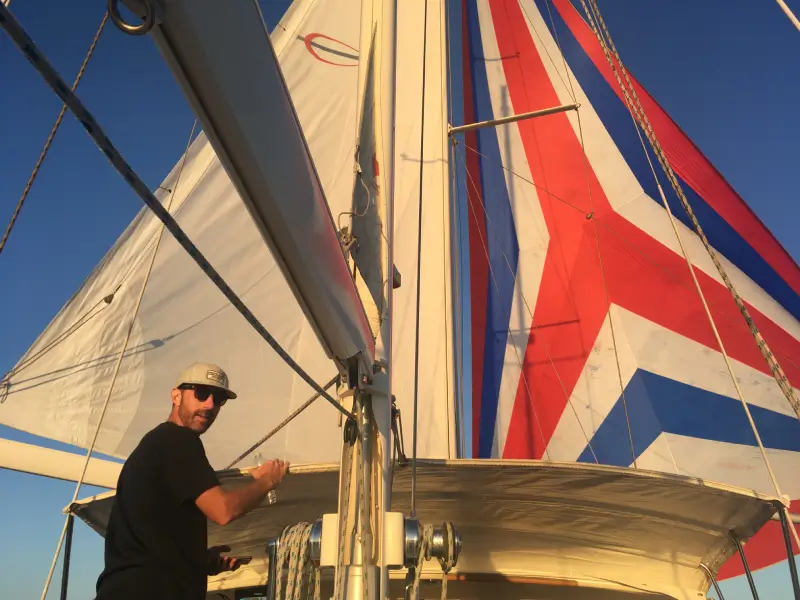
A proper ocean sailing course should teach far more than sail handling.
We will teach you how to stand a proper watch, including the use of AIS, radar, and visual navigation techniques, how to deal with fatigue, how to manage shifting wind directions, wind velocities, balancing the vessel, and changing sea states, the rules of the road regarding commercial shipping traffic and shipping lanes, understanding weather forecasting and routing, and how to use apps such as PredictWind and Windy.
You should learn all onboard systems and have a thorough understanding of how to manage them, how to use them, and how to maintain them. These systems include the electrical systems, charging systems, power management, batteries, watermakers, plumbing systems, communication equipment, navigation electronics, refrigeration, diesel engines, generators, emergency safety equipment, and virtually every operational aspect of the vessel. When offshore sailing, every single part of the boat is being utilized. And when you are offshore, or possibly hundreds of miles away from help, you need to become completely self-sufficient.
This is why offshore passage training is so valuable. Being fully immersed during this type of training is one of the best ways to learn. You are living aboard the vessel, operating all of the onboard systems, and learning continuously as you go. The level of understanding you gain by actually doing it is unparalleled.
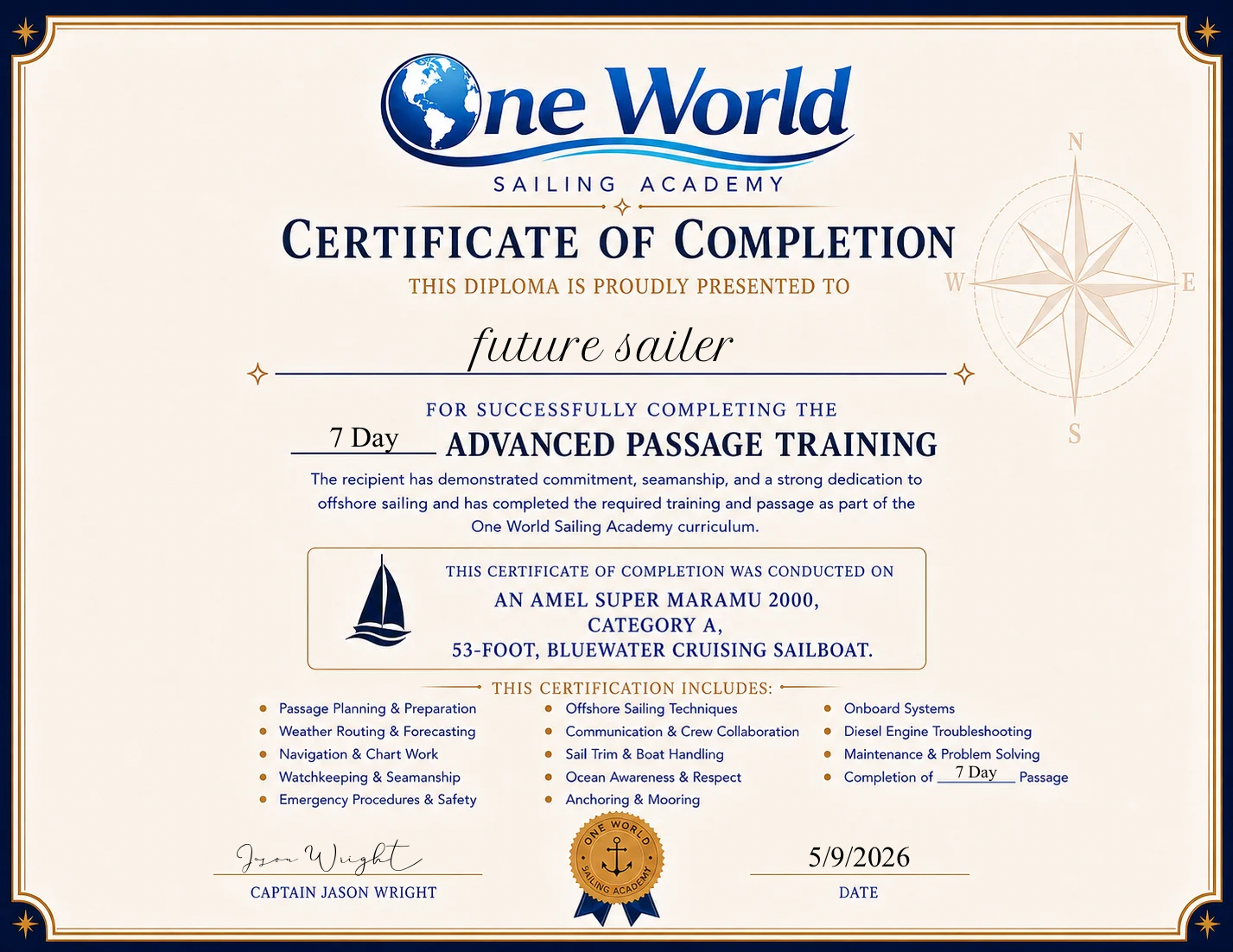
At One World Sailing Academy, we focus heavily on practical offshore sailing training aboard a Category A ocean-rated Amel Super Maramu 2000. The goal is not to create a highly scripted classroom environment. The goal is to expose students to the realities of operating a serious offshore cruising vessel in real conditions.
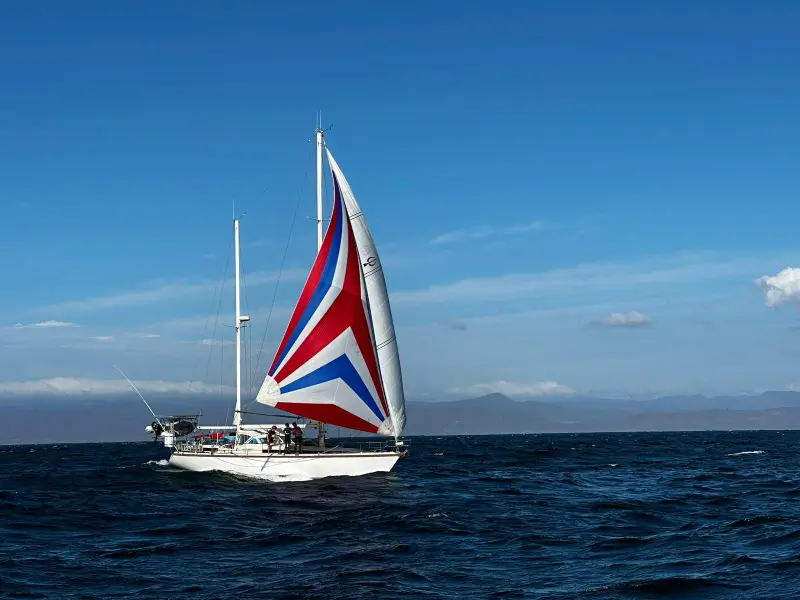
Southern California, the Channel Islands, and Mexico are all outstanding training grounds for this type of instruction. Conditions can change quickly. One day may be calm and comfortable, while the next day may bring accelerated winds, rougher sea states, and rolly anchorages. Virtually all of the conditions someone may experience while offshore sailing or cruising can be encountered in these three locations.
Students will learn weather routing, anchoring techniques, watchstanding procedures, sail configuration changes, power management, navigation, emergency procedures, all onboard systems and safety equipment, and troubleshooting, all within the same multi-day trip.
The vision most people have of offshore sailing is day after day of pristine downwind sailing in perfect conditions, beautiful sunsets, tropical anchorages, dolphins crossing the bow, and unforgettable experiences. But offshore sailing is not always like that. Sometimes it involves multiple days of rough weather, constant motion onboard, fatigue, troubleshooting equipment problems, or making repairs while underway. Offshore sailing is not always pristine conditions, and that is exactly why proper preparation and training matter so much.
In an immersive offshore sailing course, you learn very quickly because you are doing everything yourself, living aboard the vessel, and operating all of the onboard systems continuously. You develop good habits offshore. You learn how to maintain situational awareness, how to understand your vessel’s electrical and plumbing systems, and how to operate safely and efficiently in constantly changing conditions.
One of the major benefits of an offshore sailing course in the USA is that students can begin developing those skills close to home before committing to larger offshore goals. There is tremendous value in learning offshore systems and passagemaking skills in the USA first, and then expanding your horizons to foreign countries, ocean crossings, or even circumnavigation. It makes sense to learn at home first and then use those skills to explore the world.
At the end of the day, the goal is not simply to “go sailing.” The goal is to become capable offshore.
That means understanding weather, navigation, onboard systems, anchoring, emergency procedures, crew management, routing decisions, maintenance, and the overall operational side of offshore cruising. It means learning how to manage a vessel safely and efficiently beyond the protected coastline.
“An offshore sailing course, once completed, should leave you with the skills and understanding required for the realities of offshore cruising and offshore passagemaking. That is the true goal of an offshore sailing course, and it is a goal that One World Sailing Academy takes very seriously.”